Category
  • Homes
  • > Blog
  • > Blog Details

Projector Headlamps Explained: Beam Pattern, Safety & Visibility — What Drivers Need to Know

Projector headlamps use an int...
Projector Headlamps Explained: Beam Pattern, Safety & Visibility — What Drivers Need to Know
Projector headlamps use an internal lens and cutoff shield to shape a controlled beam pattern that improves forward visibility while reducing glare for oncoming traffic. You get a denser, more focused light output, placing illumination where you need it most instead of letting it scatter upward or outward.

From a manufacturing and engineering perspective, projector headlamps juggle optical precision, housing depth, heat management, and aiming tolerance. Lens geometry, shutter design, and alignment all play into beam pattern consistency, safety compliance, and the real-world performance you see across different vehicles.

Projector Headlamps


What Are Projector Headlamps?

Projector headlamps use an enclosed optical system to shape and control light before it hits the road. You get a defined beam pattern, controlled glare, and consistent illumination that lines up with modern safety and regulatory standards.

The design focuses on optical precision, not just raw output.


How Projector Headlamps Differ From Reflector Headlamps

Projector headlamps and reflector headlamps handle light in totally different ways. Reflector systems use a mirrored bowl to scatter light forward, making beam control heavily dependent on the reflector’s shape and the bulb’s position.

Small manufacturing variations can lead to uneven output and more glare than you’d like.

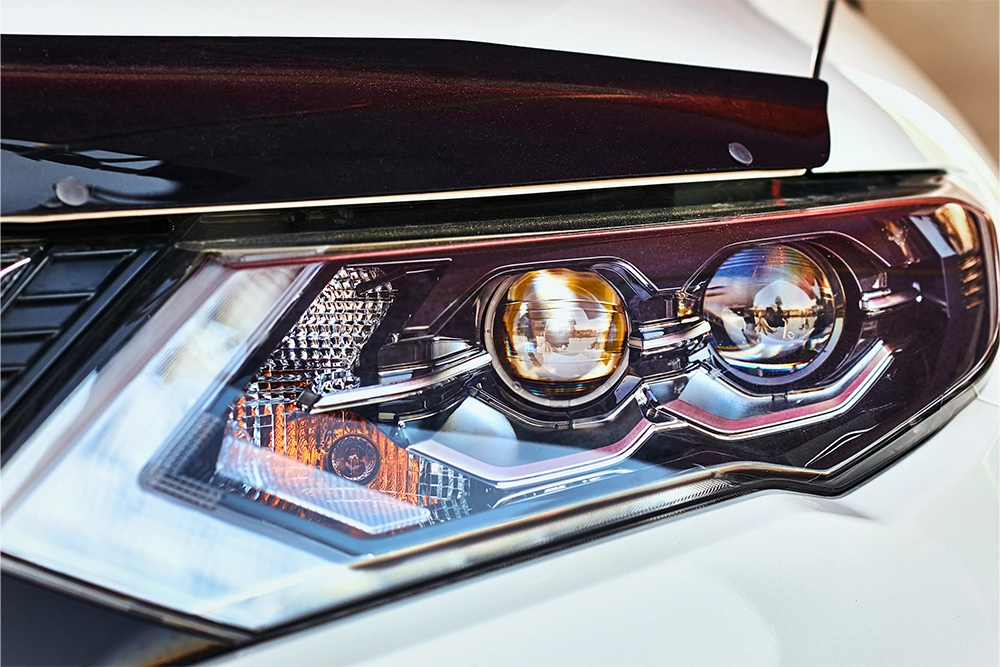
Projector systems keep the light contained inside a compact module. The reflector bowl sends light toward a lens, while a cutoff shield blocks unwanted upward spill.

You end up with a sharp horizontal cutoff instead of a hazy, diffuse pattern.

Projector units require tighter alignment and more parts. That does bump up complexity and cost, but you get more predictable beam performance across various vehicles and bulb types. Consistency really matters when integrating LEDs or HIDs, since they behave differently than old-school halogen bulbs.


Key Components of Projector Headlamps

A projector headlamp has four main parts working together as a single optical unit:

● Light source: halogen, HID, or LED, picked based on thermal and electrical needs
● Reflector bowl: gathers and directs light toward the lens
● Cutoff shield: shapes the beam and blocks upward glare
● Projector lens: focuses and spreads light onto the road

This enclosed design means each part has a clear job. Engineers tweak reflector geometry and shield shape to meet beam pattern rules. Lens curvature then fine-tunes how much light spreads up close and how far it reaches.

Manufacturers have to balance size, heat, and how easy it is to service. Compact modules fit modern car designs but leave less room for cooling, especially with powerful LEDs. These trade-offs impact how long the headlamps last and how well they perform over time.

Projector Headlamps


Common Types of Projector Headlamps

Projector headlamps work with several light technologies, each with its quirks. Halogen projectors use a filament bulb and are affordable, but they run hotter and are less efficient.

HID (xenon) projectors put out more light with a stable arc source. You get better distance illumination, but they need ballasts and a bit of warm-up time. Packaging and wiring get trickier.

LED projectors use solid-state emitters, often mounted right on heat sinks. They respond quickly, last long, and let you shape the beam more flexibly. The catch? Managing heat is a big deal, especially in tight spaces.

Your car’s setup—available power, housing size, and what the law allows—determines which type makes sense. Manufacturers choose and design each projector type based on these factors.


Understanding Beam Pattern

A projector headlamp shapes light before it ever hits the road. You notice this in the sharp cutoff lines, clear differences between low and high beams, and the predictable illumination that helps you drive safely at night.

Cutoff Lines and Light Distribution

A beam pattern shows how a projector headlamp spreads light across the road. The cutoff line stands out—it marks the top edge of low-beam light.

Engineers create the cutoff with a metal shutter at the projector lens’s focal point. This shutter blocks upward light but lets a controlled spread go forward and outward. The lens projects this shaped light down the road.

A clean, steady cutoff keeps glare out of oncoming drivers’ eyes. At the same time, the beam widens to light up lane edges, signs, and obstacles. Some designs include a step or a bit of asymmetry to boost right-side visibility without bumping up overall glare.

Manufacturers have to juggle sharpness and width. A sharper cutoff lowers glare but can leave you with less foreground light if it’s too aggressive. A wider beam helps you see more, but it needs careful aiming to stay legal.


High Beam vs Low Beam Projection

Projector systems handle low and high beams in different ways, even if they share the same housing. You’ll notice the difference as soon as you switch modes.

Low beam uses the shutter to shape the pattern. High beam either removes or moves that shutter, letting more light through the lens.


Feature Low Beam High Beam
Cutoff control Fixed, sharp Removed or minimal
Vertical reach Limited Extended
Primary purpose Glare control Distance visibility

High beams are tuned for forward reach, not side spread. That helps you spot hazards when you’re moving faster and need more stopping distance. The downside? More glare, which is why you need to switch them manually or rely on automation.

Impacts on Road Illumination

Beam pattern has a direct impact on what you see at night. A well-shaped pattern gives consistent brightness where your eyes expect it, so you’re less tired and react faster.

Projector optics focus light into specific zones instead of scattering it everywhere. You get better contrast between the lit pavement and the dark surroundings, which helps you judge lane position, curves, and distance to objects.

Manufacturers factor in things like ride height, suspension movement, and aiming variation. These affect how well the beam works outside the lab. Engineers build in some tolerance so the pattern still works even if things aren’t perfectly aligned.

You rely on this balance every time you drive after dark. The beam pattern shapes not just what you see, but how safely and predictably you see it.


Safety Benefits of Projector Headlamps

Projector headlamps boost safety by controlling how light leaves the housing and hits the road. You get clearer forward vision, less stray light, and more predictable results across different bulb types.

Improved Nighttime Visibility

Projector headlamps use a lens and cutoff shield to shape light into a defined beam. You’ll notice a brighter foreground and a longer, more even spread down the road. That means fewer hot spots and dark gaps, which really helps on long night drives.

Manufacturers tweak the reflector bowl, shield, and lens as a system. You get steady output even if your car’s loaded a bit differently. Sure, it’s more complex, but the payoff is clearer object recognition at speed, especially on dark roads.

You also see steadier performance whether you use halogen, HID, or LED. The optics control the light right at the source, so you don’t need to crank up the brightness to get better visibility.


Reduction in Glare for Oncoming Traffic

Projector systems keep upward light in check with a sharp horizontal cutoff. You’re not blinding drivers coming the other way or lighting up their mirrors. That’s important because glare slows reaction times and tires people out.

The cutoff shield is key here. Engineers position it really precisely at the focal point, which demands tight manufacturing tolerances.


Feature Projector Headlamp Reflector Headlamp
Upper beam control Defined cutoff Diffuse
Glare risk Lower when aligned Higher
Sensitivity to bulb type Lower Higher

You still need to aim them right. Even the best projector will cause glare if you install or adjust it incorrectly.

Contribution to Accident Prevention

Controlled light helps you spot pedestrians, road edges, and lane markings sooner. You get usable light where you make decisions, not wasted brightness above the horizon.

Engineers balance beam width and intensity. A wider beam helps with peripheral awareness, but too much spread can cut down forward reach. Projector optics let you find that sweet spot with fewer compromises.

You’ll also notice more consistent performance in bad weather. Rain and light fog bounce less stray light back at you when the beam stays low and focused. That steadiness means you make better driving decisions and lower your risk of visibility-related mishaps.

Projector Headlamps


Visibility Enhancements and Limitations

Projector headlamps improve forward visibility by tightly controlling light, but that control comes with trade-offs.

Weather, side illumination, and system complexity all affect how the beam actually works out on the road.


Performance in Different Weather Conditions

Projector headlamps use a lens and cutoff shield to shape light into a controlled pattern. The upper cutoff keeps upward scatter down, which cuts glare in clear or lightly wet conditions. That matters because stray light bounces back at you in bad weather.

In rain, fog, or snow, the sharp cutoff can be a double-edged sword. Light that stays low reflects less off moisture in the air, but it also means you don't light up distant reflective surfaces as much.


Condition Practical Effect
Rain Less glare, but you lose some distance detail
Fog Cleaner cutoff, though you’ll want fog lamps for better penetration
Snow Less backscatter, but a narrower useful field

Manufacturers try to balance cutoff height and beam intensity to meet the rules while keeping contrast useful in all sorts of weather.

Effects on Peripheral Vision

Projector systems focus light forward, giving you better contrast in your main line of sight. Lane markings, road texture, signs—they’re all clearer straight ahead.

But that focus means less light at the edges. You might notice road edges aren’t as bright as with reflector designs. Engineers sometimes shape the beam with steps or add side fill zones, but that can make the optics less efficient.

With dual-projector setups, designers might dedicate one optic for low beam spread and another for high beam reach. That boosts coverage but adds cost, packaging headaches, and more heat to manage inside the housing.


Limitations and Potential Drawbacks

Projector headlamps need precise manufacturing. Even small alignment errors during assembly or installation can shift the cutoff and leave you with uneven light. You might feel this as patchy illumination, not outright failure.

Heat management is another hurdle. High-output HID or LED sources need shielding and cooling, which limits lens size and placement. These constraints affect how wide and tall the beam can be.

Projector systems also depend on proper aiming. If your car’s loaded differently or the suspension sags, the beam won’t line up as intended. Automatic leveling helps, but it adds more moving parts and electronics that have to last.


Installation and Maintenance Considerations

Projector headlamps need precise alignment, steady electrical input, and compatible parts. How you install and maintain them directly affects cutoff accuracy, glare control, and how they hold up over time.

Proper Adjustment and Aiming

You control beam performance by aiming them right. Projector optics create a sharp cutoff, but even small errors can send light into oncoming traffic or cut down your forward reach.

Manufacturers set aiming targets based on a level surface, correct ride height, and standard load. You should align lamps after installing them or changing suspension or tires. Use the car’s built-in adjusters—don’t shim the housing, since that stresses mounts and messes with alignment.

Key alignment checks

● Vertical cutoff height versus lamp centerline
● Horizontal symmetry between left and right
● High-beam convergence at a distance

Bad aiming often looks like an optical problem, but it’s really just a setup issue.


Routine Maintenance and Common Issues

Projector headlamps work best with clean optics and stable internal parts. Dust on the lens, haze on the cover, or moisture inside the housing all cut contrast and blur the cutoff.

Check seals and vents during regular service. Manufacturers have to balance ventilation and moisture resistance, so blocked vents can cause condensation. Heat cycles also wear on internal solenoids, especially in bi-function (dual-beam) designs.

Electrical problems usually come from voltage instability, not the projector itself. Old wiring, bad grounds, or mismatched drivers can cause flicker or delayed ignition.

Common service issues

● Moisture from bad seals
● Blurry cutoff from dirty lenses
● Spotty high-beam operation from worn actuators
Catching these early stops permanent optical damage.


Choosing Compatible Bulbs and Upgrades

Projector systems need a specific light source shape. The reflector, shield, and lens all line up around a set arc or LED plane. You should always match replacements to the original type—halogen, HID, or LED.

If you use mismatched bulbs, the beam pattern falls apart, even if it looks brighter. Manufacturers accept some efficiency loss to keep the cutoff sharp and the foreground balanced. LED retrofits often fail because the emitter isn’t in the right spot.

Compatibility matters


Design Factor Why It Matters
Light source position Keeps the cutoff sharp
Operating temperature Protects lens and shield coatings
Electrical load Avoids stress on drivers and wiring

Pick the right parts to keep the optics working as designed and everyone safer on the road.

Frequently Asked Questions

Projector headlamps shape light precisely, affecting visibility, glare, and compliance. Choices around the light source, optics, and alignment decide how these systems work day-to-day and how they fit into your car.

How do projector headlamps enhance nighttime driving visibility?

You get a focused beam thanks to a reflector bowl and a convex lens working together. This setup puts light where you need it, not just everywhere.

A cutoff shield defines the upper edge of the beam, limiting upward light and keeping your illumination steady across lanes and distances.


What are the differences between halogen, LED, and HID projector headlamps?

Halogen projectors use a filament bulb. They keep things simple with basic heat management.

You get predictable output and lower system complexity. The brightness is moderate—not blinding, but usually enough for most needs.

HID and LED projectors need dedicated electronics. They also require more careful heat control.
With those, you get higher brightness and better efficiency. But the optics and housing have to be built with tighter tolerances.

Can projector headlamps be retrofitted into a vehicle that didn't come with them, and what are the legal considerations?

You can retrofit projectors into most vehicles, though it’s not exactly plug-and-play. The headlamp housing, mounting points, and aiming mechanism all have to fit the projector’s optical geometry.

Most regulations want certified components and correct beam patterns. If you ignore that, you might create glare or even fail inspection—some places are strict about local lighting laws.


What are the advantages of a projector headlamp's beam pattern over traditional reflector headlamps?

Projectors give you a sharper cutoff and more uniform light. That’s because they separate beam shaping from bulb position, something reflector systems just can’t do as well.

They also keep the beam pattern consistent across different light sources. Engineers can switch things up without having to redesign the whole system.


How do projector headlamps contribute to overall road safety?

Projectors put the light right where it needs to go, so oncoming drivers don’t get blinded. You see the road, lane markings, and signs more clearly, without annoying light spill.

Stable beam geometry makes lighting behavior more predictable. Other drivers know what to expect, which definitely helps everyone stay safer out there.


What maintenance considerations are there for projector headlamps?

You'll want to keep the lenses clean and free of haze. Dirt can really mess with beam sharpness.

Most of the internal parts stay sealed, so you don't have to worry about routine service there.

Replacing the light source depends on what the projector uses. LEDs usually last as long as the car, but halogen and HID bulbs might need changing and a bit of re-aiming now and then.

Want to Know More About Our Products

View All Products Now